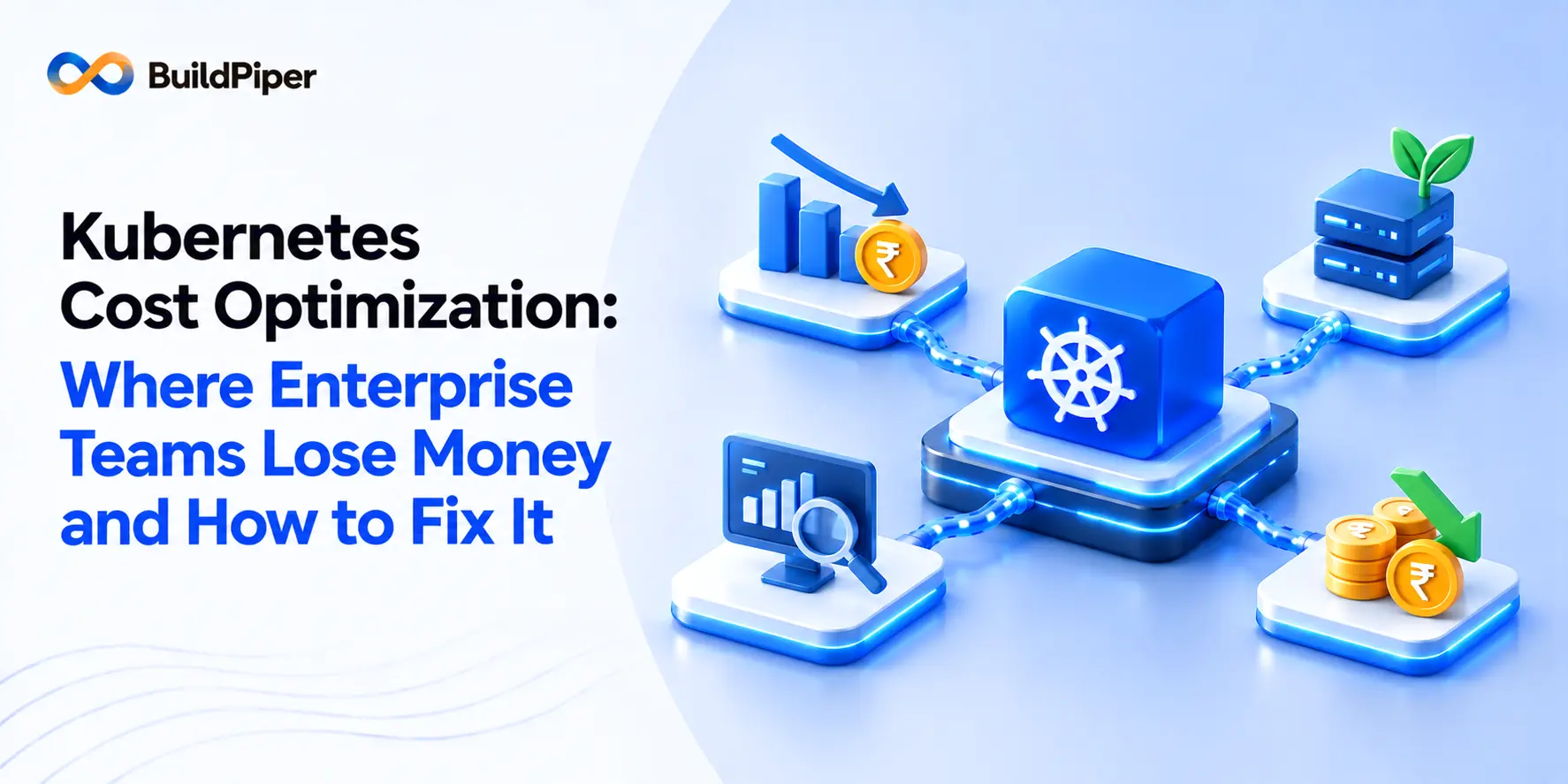
Kubernetes simplifies the process for engineering teams to deploy, scale and manage applications. However, as organizations move beyond a limited number of containers to utilizing hundreds of services across various clusters, managing infrastructure costs becomes increasingly complex.
The issue is not just about the amount of infrastructure being used. It also encompasses how that infrastructure is provided, shared, monitored and maintained.
Development environments left running over the weekend, resource-intensive services, or legacy deployments that were never removed, all of these can quietly drive up monthly cloud costs. When such issues exist across multiple teams and clusters, keeping their financial impact under control becomes extremely difficult.
Therefore, for enterprise engineering teams, optimizing Kubernetes costs is not limited to simply reducing computing resources. It requires better infrastructure visibility, consistent deployment practices, workload management and operational execution.
Let’s look at where enterprise teams lose money and what they can do to prevent unnecessary spending on Kubernetes.
Where Do Enterprise Kubernetes Costs Actually Go?
Costs associated with Kubernetes are distributed across various infrastructure and operational components. While some of these expenses are clearly visible in cloud billing statements, others are difficult to identify without a clear understanding of how applications and workloads operate.
Here are five prevalent areas where enterprise teams incur losses.
Overprovisioned CPU and Memory Resources
Resource allocation is a major cause of inefficiency in Kubernetes.
During application deployment, engineering teams often allocate significantly more CPU and memory resources than the workload actually requires. These allocations are frequently based on estimates, outdated configurations, or anticipated peak demand, rather than on actual usage.
For example, a service configured with 2 CPU cores and 4 GB of memory might consistently utilize only a small fraction of these resources.
When this issue occurs across multiple workloads, organizations are ultimately forced to reserve infrastructure capacity that provides only minimal utilization.
How to fix it:
- Monitor actual CPU and memory consumption over representative periods.
- Review resource requests and limits regularly.
- Use Vertical Pod Autoscaler (VPA) recommendations to identify potential adjustments.
- Validate changes against application performance and reliability requirements.
- Establish resource allocation standards across development and production workloads.
Development and Testing Environments Running Without Purpose
Enterprise teams often maintain separate environments for development, QA, testing, staging and production.
While it is necessary to keep these environments separate, it is not required for every environment to be active at all times.
For example, consider a staging environment that is primarily used during business hours. If its infrastructure remains active overnight, on weekends and during periods of development inactivity, the organization incurs costs for capacity that is not being utilized.
This problem becomes even more apparent when multiple teams set up temporary environments for testing, proof-of-concept projects and application releases.
How to fix it:
- Identify environments with consistently low activity.
- Introduce scheduled shutdowns for non-production workloads.
- Scale down temporary environments when they are no longer required.
- Establish ownership and expiry policies for temporary deployments.
- Review unused namespaces and associated infrastructure periodically.
Environmental management should be part of the deployment lifecycle, rather than an activity undertaken only when costs rise.
Too Many Clusters, Services and Deployment Pipelines
As organizations increasingly adopt Kubernetes, it has become common for different engineering teams to develop their own deployment strategies.
For instance, one team might implement a custom-tailored Jenkins pipeline, another might opt for custom scripts, while a third team might manage infrastructure configuration independently.
This leads to a lack of coordination in operations.
The consequences are not limited to costs associated with tools alone. Teams end up spending more engineering time maintaining pipelines, troubleshooting deployment issues, managing configurations and coordinating changes across the infrastructure.
Having multiple clusters and redundant environments can also increase the overhead involved in managing the infrastructure.
How to fix it:
- Standardize deployment workflows across engineering teams.
- Establish reusable CI/CD pipeline templates.
- Consolidate clusters where isolation and compliance requirements permit.
- Maintain consistent deployment configurations.
- Introduce centralized governance for application and infrastructure delivery.
A standardized platform approach reduces repetitive engineering efforts and simplifies the management of infrastructure operations as the organization expands.
Poor Visibility Into Workload and Infrastructure Ownership
In a shared Kubernetes environment, multiple teams have the ability to deploy applications and consume resources from a common pool of infrastructure.
However, most cloud billing reports focus primarily on infrastructure-level costs, failing to provide a complete picture of each workload in terms of its business context.
When labeling, namespace ownership and resource monitoring are not properly implemented, it becomes difficult to determine which team or application is responsible for a sudden spike in resource usage.
This creates a significant problem: while infrastructure teams are tasked with managing costs, they often lack the necessary information to identify the source of those costs.
How to fix it:
- Assign ownership to namespaces and workloads.
- Standardize labels for teams, applications and environments.
- Monitor CPU, memory, storage and network utilization.
- Use Kubernetes cost allocation tools such as OpenCost or Kubecost.
- Establish regular infrastructure reviews with engineering teams.
Cost visibility becomes even more useful when every resource has an identifiable owner.
Deployment and Release Inefficiencies
Not all Kubernetes-related costs are immediately visible in a cloud infrastructure bill.
Imagine an engineering team spending hours manually setting up environments, resolving deployment discrepancies and troubleshooting failed releases.
These tasks consume engineering resources that could be better utilized for developing and improving applications.
Frequent deployment failures, a lack of configuration consistency and the manual setup of environments increase the time required for software delivery.
For large organizations managing numerous services, such inefficiencies can become a significant operational burden.
How to fix it:
- Automate repetitive deployment activities.
- Standardize release workflows across applications.
- Adopt GitOps-based deployment practices.
- Introduce consistent environment provisioning.
- Integrate security and validation checks into delivery pipelines.
Reducing unnecessary operational tasks allows engineering teams to spend more time on product development, rather than maintaining fragmented delivery processes.
Practical Kubernetes Cost Optimization Strategies for Enterprise Teams
Identifying cost leaks is merely the first step. Organizations need a repeatable process to ensure that the same problems do not recur.
The approaches outlined below offer a practical starting point.
| Optimization area | Recommended action |
|---|---|
| Resource utilization | Review CPU and memory requests against actual usage |
| Autoscaling | Configure HPA, VPA, and node autoscaling according to workload requirements |
| Environment management | Schedule inactive development and testing environments |
| Infrastructure | Evaluate node types, Spot capacity, and committed-use pricing |
| Storage | Review unused persistent volumes and oversized storage allocations |
| Deployment management | Standardize CI/CD and GitOps workflows |
| Governance | Apply namespace quotas, resource policies, and ownership labels |
| Monitoring | Track resource consumption and identify unusual usage patterns |
The key is to integrate these practices into everyday engineering workflows. If an optimization policy is not followed during application deployment, it will lose its effectiveness over time.
Why Kubernetes Cost Optimization Requires Better Platform Engineering
In many organizations, the responsibility for optimizing Kubernetes costs often falls entirely on the infrastructure team. However, it is important to recognize that these teams cannot single-handedly oversee every decision that impacts resource utilization.
Developers define application requirements. Platform teams oversee deployment environments. DevOps engineers ensure smooth delivery pipelines. Cloud teams manage infrastructure capacity.
All these roles are interconnected.
For example, deploying an application might result in unnecessary replicas, an environment might remain active for longer than needed due to improper configuration or the capacity of a node might need to be increased to accommodate changing resource requirements.
Without collaboration among these teams, the process of cost optimization may be limited to merely reacting when problems arise.
Adopting a mature platform engineering strategy can streamline these workflows through standardized provisioning, reusable deployment processes, centralized governance and consistent operational visibility.
This is where an enterprise software delivery platform can demonstrate its true potential.
How BuildPiper Supports Better Kubernetes Operations
Managing Kubernetes at an enterprise level requires continuous control over clusters, application deployments and infrastructure environments. BuildPiper, an AI-powered enterprise software delivery and DevSecOps platform, helps streamline Kubernetes operations through a unified control plane.
Its core capabilities include KubeOps for Kubernetes workload and cluster management, GitOps for continuous application deployment, EnvOps for environment lifecycle management and DeployX for streamlined Kubernetes deployment workflows.
Additionally, SecOps and DevGuard strengthen security and governance throughout the entire software delivery lifecycle.
Together, these capabilities help enterprise teams standardize Kubernetes management, reduce manual operational costs and maintain more consistent deployment processes across various environments. BuildPiper complements tools dedicated to Kubernetes cost monitoring and addresses operational inefficiencies that can lead to infrastructure waste.
Conclusion
Optimizing costs in Kubernetes is not just about reducing infrastructure resources, it also involves improving the management of workloads, environments and deployments for better operational efficiency. By maximizing resource utilization, strengthening governance and standardizing delivery methods, organizations can effectively control unnecessary expenses while maintaining reliability.
BuildPiper helps enterprises simplify Kubernetes operations, streamline deployments and maintain consistent software delivery through a unified platform.
Frequently Asked Questions (FAQs)
1. What is Kubernetes cost optimization?
The primary objective of Kubernetes cost optimization is to reduce unnecessary infrastructure expenditure by improving resource utilization, effectively managing workloads, and precisely adjusting cluster capacity.
2. What are the main causes of high Kubernetes costs?
Excess costs often arise from issues such as the over-provisioning of CPU and memory resources, idle development environments, unused storage, inefficient autoscaling processes, and poor resource management.
3. How can enterprises reduce Kubernetes infrastructure costs?
Enterprises can reduce costs through resource right-sizing, autoscaling, environment scheduling, infrastructure monitoring, and better workload governance.
4. How does platform engineering help with Kubernetes cost optimization?
Platform engineering helps streamline Kubernetes deployments, infrastructure provisioning, and environment management, ultimately reducing operational burden and resource inefficiencies.
5. How does BuildPiper support enterprise Kubernetes management?
BuildPiper enhances Kubernetes operations by providing tools such as KubeOps, GitOps, EnvOps, and DeployX, enabling standardized deployments and improved environment management for enterprise teams.
Related Searches
- The Evolution of CI/CD Pipelines in Kubernetes-Native Environments
- BuildPiper vs Harness — Which DevSecOps Platform Wins for Your Enterprise?
- Top DevSecOps Consulting Companies in India 2026
- Top Harness Alternatives in 2026